Home › Services
Land clearing and lot clearing in Springfield, Missouri
Clearing is one word covering at least five different jobs, and the expensive mistake on overgrown ground around Springfield is not saying which one is wanted. Selective thinning, brush and understory work, a fenceline, bare ground for a building pad, and forestry mulching all get quoted as land clearing, and they leave a property in five very different conditions. Add bush honeysuckle that resprouts from every cut stump, cedar taking a pasture, and limestone sitting a foot under the grass, and the plan matters more than the machine.
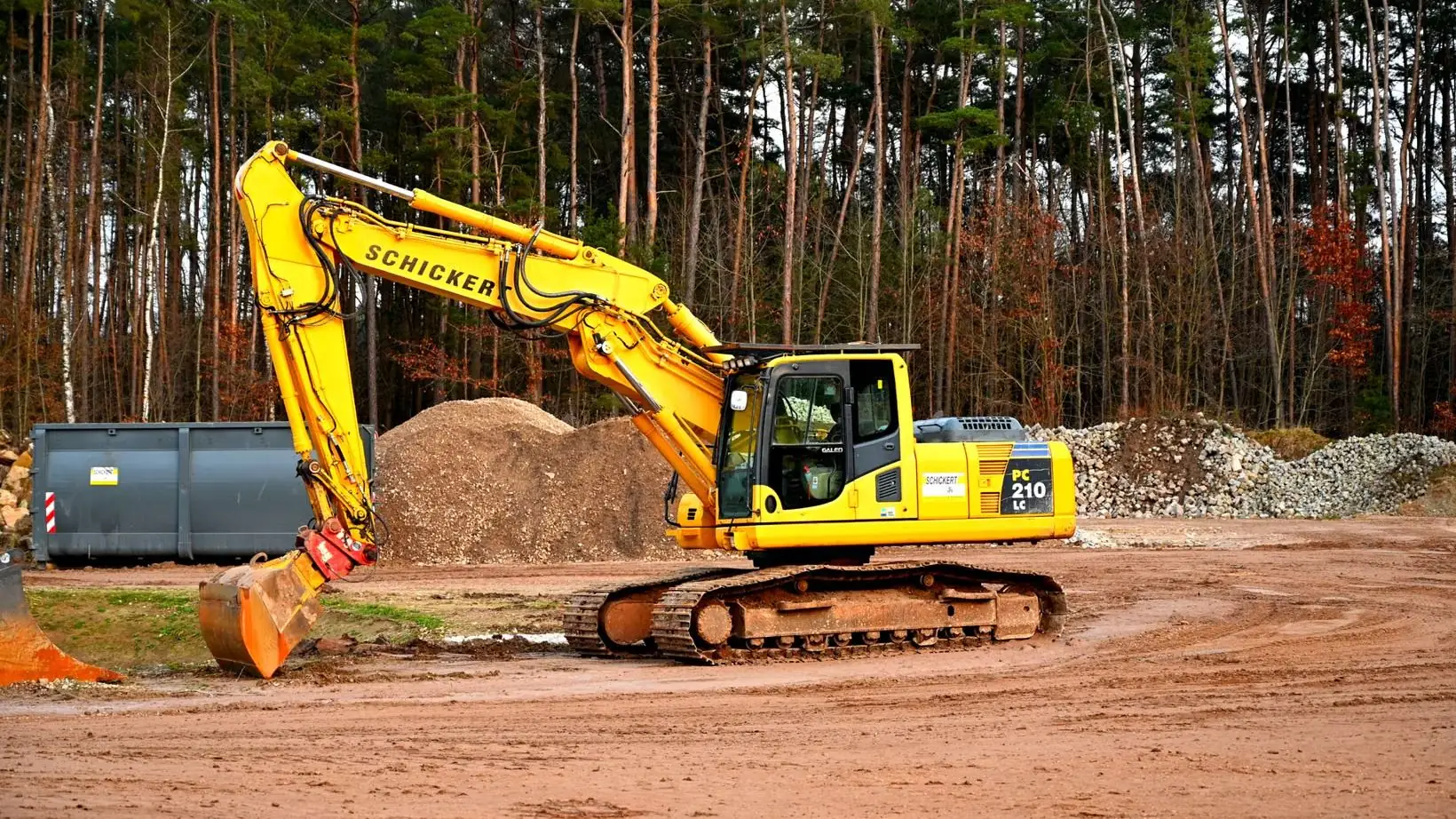
Clearing means five different jobs
Clear the lot is not a specification. It describes an intention, not an end state, and the end state is the only thing two crews can price the same way. Before any equipment is discussed, it is worth deciding which of five jobs is wanted, because they differ in cost, in disturbance, and in what the ground looks like afterward.
Selective thinning keeps the good trees and takes the junk. Crowded, leaning, damaged and low-value stems come out, and the best ones are left with room to grow. Where post oak, white oak and shortleaf pine are competing with hackberry, elm and volunteer cedar, thinning is often the highest-value work available: the canopy stays, and the trees left behind get light and water they were not getting. It is also the slowest, because every stem is a decision.
Understory and brush clearing opens a woodland up while leaving the canopy alone. Everything below roughly head height comes out, honeysuckle first, along with briars, saplings and the tangle that makes back acreage impassable. The result is woods a person can walk through and see across, with the mature trees untouched.
Fenceline and fencerow clearing is a narrow corridor job. An old fencerow is its own habitat: hedge and cedar seeded in along the wire, honeysuckle between them, and wire grown so far into trunks that removal becomes tree work. Clearing the line gives access to rebuild the fence and recovers a strip of pasture.
Full clearing takes everything to bare ground for a building pad, a driveway, or pasture. Stems, brush, stumps and root balls come out and the surface is graded. It is the most disruptive version and the one most exposed to erosion afterward, because every root that was holding soil is gone at once. Forestry mulching is the fifth, and it is a method rather than an intensity: material is ground where it stands and left as a mulch mat, with nothing piled, burned or hauled off.
- Selective thinning leaves a woodland with fewer, better trees
- Understory clearing leaves open woods under an intact canopy
- Fenceline work leaves a cleared strip and a usable fence line
- Full clearing leaves graded bare ground and no stumps
- Forestry mulching leaves a mat of ground wood and the stumps in place
Bush honeysuckle is the local clearing problem
On neglected ground around Springfield, bush honeysuckle is usually the reason clearing is being considered at all. It forms a solid green wall in the understory, dense enough to stop a person walking and thick enough to hide the trunks above it. Once it has taken a woodland, almost nothing else grows on the forest floor beneath it.
Its advantage is timing. It leafs out earlier in spring than the native plants around it and holds its leaves later into fall, so it collects light during weeks when the canopy above and the wildflowers below are bare. That extra season of growth, repeated year after year, is how it shades out everything at ground level. Birds spread the fruit, so a cleared patch surrounded by uncleared ground is reseeded from every direction.
Cutting it alone does not work. The plant resprouts vigorously from the cut stump, and a single stem taken off at the ground often returns as a cluster of several, so a stand mowed once and left alone can be denser two years later than it was to begin with. Anyone promising a lasting result from one pass with a mower or a mulching head is overselling what that pass can do. Clearing honeysuckle is a multi-season commitment, not a single visit.
- Removing the standing material is the visible half and the smaller half
- Cut stumps respond to treatment far better than established regrowth does
- Timing matters more than intensity: treat at the time of cutting
- Expect to walk the ground for several seasons, catching sprouts while small
- A quote covering only the knockdown buys one clear season, not a cleared woodland
Eastern red cedar and hedge, the fencerow species
Cedar is the other signature clearing job in this part of Missouri, and it behaves differently from honeysuckle in ways that change the plan. Eastern red cedar is native here, but without fire or active management it spreads across unmanaged pasture and prairie-edge ground the way an invasive would. It seeds in from fencerows and untended field corners, then moves into open ground.
Size is the whole story. A young cedar pulls out of soft ground by hand, and a small one cuts off in seconds. Above a certain size the canopy closes, the dense evergreen foliage casts shade all year, and grass underneath stops growing entirely. Past that point each tree is a genuine removal, and a pasture with a hundred of them is a clearing project rather than a mowing problem.
The good news is permanence. Cedar does not resprout from a cut stump, so a cedar cut at ground level is finished. That makes it far more durable work than honeysuckle clearing: the labor goes in once, and the only return is for seedlings arriving from nearby seed, which regular mowing catches while they are small.
Osage orange, known locally as hedge, is the other fencerow tree, planted as living fence generations ago and never removed. The wood is extraordinarily dense and hard, enough to dull saw chains quickly and to slow a mulching head that handles oak without complaint. The trees are thorny, and the thorns and broken stubs are notorious for flat tires on skid steers and trailers. Hedge takes longer per stem than its size suggests, so a quote treating a hedge row as ordinary brush has probably not looked at it closely.
Forestry mulching, and where it stops
Forestry mulching is genuinely good at what it does. A rotary head grinds standing brush and small trees into chips on the spot, and because nothing gets piled, burned or hauled, the job runs fast and finishes clean in one pass. The chips form a mat that suppresses regrowth for a while by shading the soil surface, and that same mat protects thin Ozarks soil from rain that would otherwise hit it bare.
The limits are equally real and get glossed over. Mulching cuts and grinds at and slightly above the surface. It does not remove stumps and it does not touch root systems, so the ground underneath is still full of wood, which matters the moment anything requires digging. The mat itself can also be a problem: a heavy layer of fresh chips is too thick to seed or plant into immediately, and a pasture seeding put down onto deep mulch often fails because the seed never reaches soil.
- Leaves every stump and root system in the ground
- Not suitable where the ground has to be excavated or graded
- A thick fresh mat blocks seeding and planting until it breaks down
- Works poorly on very large stems, which still need conventional felling
What happens to the material
Every clearing job produces far more wood and brush than it looked standing up, and what happens to it drives much of the cost and nearly all of the mess. A proposal should name one of four answers.
Chipping runs the brush through a chipper and either blows the chips on site or loads them out. The chips are useful as mulch, though a large job makes more than a yard can absorb. A mulch mat left in place skips hauling entirely. Firewood-size wood can be cut to length and stacked for the owner, worth asking about on oak and hickory and worth declining on hedge unless someone wants to split it.
Burning is the traditional answer on acreage and the one needing the most care in planning. Open burning is regulated, and the requirements are not the same inside Springfield city limits as out in the county, so what a neighbor did may not be allowed on this ground. Burn bans get issued in dry and windy conditions and can arrive after a job is scheduled. The honest instruction is simple: check the current local requirements before planning to burn anything, and keep a second plan for the material in case burning is off the table that week.
Karst ground limits what equipment can do
The shallow limestone described on the home page has a blunt consequence for machine work: digging stops where the rock starts. Worse, that depth is unpredictable, a foot down in one place and well out of reach thirty feet away. Clearing to bare ground is therefore harder to scope here than on deep soil, and a stump that was supposed to be pulled turns out to be resting on a ledge.
Sinkholes and closed depressions are the other feature of this ground, and they change the plan rather than complicate it. Any low spot that water runs into and does not run out of is a possible connection to groundwater. Those features need to be identified and left alone: not filled, not graded over, and never used as a place to push stumps, brush or spoil, because material dumped into a sinkhole goes toward the aquifer that supplies wells and springs. A sinkhole on a property is worth getting advice on before clearing is planned around it, and the Missouri Department of Conservation is a reasonable place to start.
Slope, erosion and the water that leaves with the trees
Clearing a wooded slope removes what was holding the soil in place. The roots were a net, the leaf litter a sponge, and the canopy broke the force of the rain before it reached the ground. Take all three off at once and the first heavy storm moves soil. On thin Ozarks ground over limestone there is not much soil to lose, so the effect shows up in one season, and what washes off does not come back.
Three habits reduce the damage. Leaving a buffer of standing trees and understory along a creek or a draw keeps fast water shaded and slowed where it cuts most. Keeping something growing through the first season, whether a temporary cover, a mulch mat or a prompt seeding, protects the surface. And on genuinely steep ground, clearing less is often right, because abandoned steep ground does not come back as a meadow. It reforests with whatever seeds in fastest, which here means honeysuckle, cedar and elm.
Waterways deserve a specific thought rather than a default. The James River, the Finley River near Ozark and Wilson's Creek all run through this area, along with many unnamed drainages that only carry water after a storm. Clearing right down to a bank has consequences for bank stability and for what the next flood does to the property, so it is a decision to make deliberately rather than by running the machine to the water.
What has to be located before anything starts
Clearing equipment moves dirt and travels over ground nobody has driven on in years. Almost every expensive surprise on a clearing job was under the surface or overhead and never got marked. Flagging takes an afternoon and prevents most of them.
Overhead electric is the one case where the work may not belong to a tree service at all. Where clearing runs under or against primary lines, cutting near those conductors is not a contractor's judgment call. In Springfield the municipal provider, City Utilities, owns that job, so the call goes out first and the clearing plan follows the answer.
- Underground utility locates, requested and marked before equipment arrives
- Property pins and boundary lines, so nothing is cleared off the wrong side
- The septic tank, the lateral field, and the lines running to it
- Wells, wellheads and abandoned well casings hidden in brush
- Existing drain tile, easily crushed and expensive to find again
- Overhead electric, which puts the utility line-clearance operation in charge
Access, ground conditions and timing
Equipment has to physically reach the work, and the constraint is usually a gate, a bridge or a soft spot rather than the acreage itself. A mulching machine or a tracked loader has a width, a height and a weight, and a farm gate or a culvert crossing over a ditch can rule out the machine that would have done the job in a day. It is worth measuring the narrowest point on the route.
Ground conditions decide what the property looks like afterward. Heavy equipment on saturated soil leaves ruts that hold water, compacts the root zone of the trees meant to be kept, and can take a season to smooth out. After a wet week, waiting is cheaper than fixing. Winter work on frozen ground is often much kinder: the surface carries weight, ruts do not form, and with the leaves down the stems are easier to judge. Dormant-season work also avoids fresh pruning wounds on oaks in the warm months, when cuts can attract the beetles that spread oak wilt.
Mark the trees worth keeping before anything starts
On acreage, the difference between a nice property and a bare one is usually a can of marking paint and an hour walking the ground first. A mature open-grown white oak, or a well-formed black walnut, is not replaceable in a lifetime, and once it is down the decision cannot be revisited. Keepers should be marked, and the marks understood by whoever is operating the machine.
There is a real caution attached to keeping trees. A tree that grew inside a dense stand grew tall and narrow with a small root plate, supported on all sides by its neighbors, and it never had to stand up to wind on its own. Clear everything around it and it is suddenly a lone tree in an open field, carrying wind loads on a trunk and roots that developed under different conditions. Trees left this way commonly fail within a few years.
The way around it is to keep trees in groups rather than as individuals, favoring those that already had open-grown form. Where a single specimen has to be kept out of a dense stand, an arborist's opinion on its exposure is cheap beforehand and impossible afterward.
What to ask for so two quotes describe the same job
Clearing quotes vary more than almost any other tree work, and most of the variation is not pricing, it is that the two crews are describing different jobs. Putting five things in writing makes them comparable.
- Which level of clearing: thinning, understory, fenceline, full clearing, or mulching
- The area, in acres, with the boundaries flagged on the ground
- What happens to the material: chipped, left as a mat, stacked, or burned
- Whether stumps are ground, and if so how far below grade
- What the ground looks like on the last day, including seeding and rutting
Land clearing and lot clearing in Springfield, Missouri — common questions
How much does land clearing cost per acre?
No honest answer exists without knowing which job is meant, because five different operations get called land clearing and they are not close in effort. Selective thinning on a lightly wooded acre and full clearing to bare ground on the same acre are different projects entirely. The real drivers are stem density and stem size, what happens to the material, whether stumps come out, slope and access for equipment, and how much hand work the ground forces. The most useful thing a landowner can do before collecting quotes is decide the end state, flag the boundary, and ask every crew to price that same description.
Will mowing bush honeysuckle get rid of it?
No. Honeysuckle resprouts vigorously from cut stumps, and a stem cut at ground level often returns as a cluster of several, so a stand that is mowed once and then ignored can be thicker two years later than before it was touched. Mowing or mulching removes the standing material, which is useful and sometimes necessary, but it is the first half of the job. The result depends on what happens to the regrowth: treating stumps at the time of cutting, and walking the ground in following seasons to catch new sprouts and seedlings while they are small. Plan on several seasons rather than one visit.
What is forestry mulching and when is it the wrong choice?
A machine with a rotary head grinds standing brush and small trees in place and leaves the material on the ground as a mulch mat, so nothing is piled, burned or hauled away. It is fast, it protects soil from erosion, and it suppresses regrowth for a while. It is the wrong choice when the ground has to be excavated or graded, because it leaves every stump and root system in place. It is also wrong where immediate seeding or planting is the goal, since a thick fresh mat keeps seed from reaching soil, and it struggles on very large stems, which still need conventional felling.
Can cleared brush and trees be burned on the property?
Sometimes, and the rules are worth checking before the job is scheduled rather than after. Open burning is regulated, and the requirements inside Springfield city limits are not the same as those out in the county, so what is allowed on a neighboring property may not be allowed on this one. Burn bans are also issued during dry and windy stretches and can land after a crew is already booked. Check the current requirements with the city or the county for the specific address, and agree on a backup for the material, chipping, a mulch mat, or haul-off, so a ban does not stop the project.
There is a sinkhole on the property. Does that change clearing?
Yes, and it is worth getting advice on before a plan is finalized. Springfield sits in karst country, where limestone near the surface is dissolved and channeled underneath, so a sinkhole or a closed depression that takes water and never drains at the surface is likely connected to groundwater. Those features should be identified, flagged and left alone: not filled, not graded across, and never used as a spot to push stumps, brush or spoil, because material placed there goes toward the aquifer that feeds wells and springs. Clearing can work around a sinkhole, but the plan has to acknowledge it exists.
Is eastern red cedar hard to clear, and does it come back?
Cedar is straightforward compared with honeysuckle, mainly because it does not resprout from a cut stump. A cedar cut at ground level is finished. Size is what decides the effort: small ones pull out by hand or cut off in seconds, while an established tree with a closed evergreen canopy is a genuine removal with real weight and a real volume of brush. Cedar is native here but spreads across unmanaged pasture without fire or management, seeding in from fencerows and field corners. Keeping it out afterward is mostly a matter of mowing or brush hogging open ground while seedlings are still small.
Which trees should be kept when clearing acreage?
Trees that cannot be replaced within a lifetime: a mature open-grown white oak, a well-formed black walnut, anything with a wide low crown and good trunk taper that clearly grew with room around it. Mark keepers on the ground before equipment arrives, and make sure the operator knows the marks. One caution matters. A tree that grew inside a dense stand never carried wind on its own, and leaving it standing alone exposes a narrow trunk and a small root plate to loads it never developed for, so it may fail within a few years. Keeping trees in groups is safer than keeping single specimens.
Talk through your site
Start with the address, what you want done, and a few photographs of the area, including anywhere water sits after a heavy rain.
Related work
Tree Removal
Taking a tree down safely when it is dead, failing, or standing too close to something it can reach.
Tree Trimming & Pruning
Cuts that reduce weight and risk without stripping a tree of what keeps it alive.
Stump Grinding & Removal
Grinding a stump out, how deep is deep enough, and what to do with the hole and the chips.
Storm & Ice Damage
Ice loading, straight-line wind and windthrow, and what to do with a tree that is already leaning on something.
Tree Health & Disease
Reading decline in oak, ash and pine on thin Ozarks soil, and telling a treatable problem from a hazard.
Across the metro
Nixa
Christian County subdivisions carved out of old oak woodland, with mature trees left standing close to new houses.
Ozark
Finley River bottoms and steep wooded lots where sycamore and silver maple grow fast and fail early.
Republic
Open prairie edge west of Springfield, where wind arrives with nothing to slow it down.
Willard
Rolling pasture and fencerow cedar north of town, with hedge and volunteer trees crowding property lines.
Battlefield
Established southwest-side neighborhoods with large old post oaks over roofs and driveways.